Introduction
The contemporary international system is experiencing a profound crisis when it comes to peacebuilding and multilateral cooperation. Armed conflicts in Sudan, Ukraine, Gaza, the Middle East, the Democratic Republic of Congo, and countries in other regions continue to expose the growing limitations of existing mechanisms in practicing conflict prevention, mediation, and post-conflict recovery. At the same time, geopolitical rivalries among major and emerging global powers increasingly constrain the ability of international institutions to build consensus around peace initiatives. ¹
As the international community gradually turns its attention toward the eventual selection of a new Secretary-General of the United Nations, a familiar debate has resurfaced: should the position follow the informal but long-observed principle of geographic rotation, or should the evolving complexity of the global order compel member states to prioritize strategic leadership over regional expectation? ²
For many observers, Central America and South America seem to be positioned to claim the next opportunity under this unwritten convention. Yet history repeatedly demonstrates that the United Nations has never fully functioned according to symbolic regional sequencing. Rather, the selection of a Secretary-General has always been shaped by a more complex combination of geopolitical consensus, institutional necessity, diplomatic acceptability, and the demands of historical circumstance. ³
This distinction is critical. The central question is not which continent “deserves” the office next, but which candidate possesses the political acumen, diplomatic credibility, moral authority, and strategic flexibility necessary to guide the United Nations through one of the most fragmented international environments since the end of the Cold War. ⁴
Today’s globalized world is not merely experiencing periodic crises. It is undergoing a broader structural disruption, partly marked by growing rivalry between major powers, declining trust in multilateral institutions, widening inequalities between the Global North and South, debt crises in developing economies, accelerating climate emergencies, mass displacement, and protracted conflicts that collectively expose the limitations of conventional diplomatic frameworks.⁵ In such circumstances, strict adherence to geographic custom may prove less compelling than the search for leadership capable of navigating systemic turbulence and rebuilding confidence in international cooperation. It is within this broader strategic logic that an African candidate may be considered for the exalted position.
African Leadership, UN, and the Future of Global Peacebuilding
The current debate surrounding the future leadership of the United Nations cannot be separated from broader questions of peacemaking, peacebuilding, and post-conflict recovery. While discussions about the role of the UN Secretary-General often focus on representation and geopolitical balance, the more pressing challenge concerns the capacity of the organization to respond effectively to a world that is increasingly characterized by protracted conflicts, state fragility, humanitarian crises, and growing geopolitical polarization.6
In this regard, Africa’s contemporary history offers valuable lessons. For many years, the continent was frequently portrayed as a site of international peacebuilding interventions, rather than an important contributor to peacebuilding discourses, knowledge, and practice. Such perspectives often underestimate the role of African institutions, thinkers, political leaders, civil society organizations, and local communities in developing innovative approaches to conflict resolution, mediation, reconciliation, and reconstruction.7
Over the past three decades, African regional organizations have assumed increasing responsibility for conflict management and peace support. The African Union, Economic Community of West African States (ECOWAS), Intergovernmental Authority on Development (IGAD), and other regional bodies have played significant roles in mediation efforts, political negotiations, election monitoring, peace implementation, and post-conflict stabilization across the continent. These engagements have generated practical experience in navigating fragile political transitions, facilitating dialogue among competing actors, and supporting peace processes under highly challenging conditions.8
Equally important are Africa’s experiences with post-conflict recovery and reconciliation. Countries such as South Africa, Rwanda, Liberia, and Sierra Leone have pursued different pathways toward rebuilding societies affected by violence and political instability. While each case remains unique, they collectively demonstrate the importance of institution-building, social healing, inclusive governance, economic recovery, and long-term reconciliation as essential foundations for sustainable peace. These lessons have increasingly informed international debates on conflict transformation and post-conflict development.9
Africa’s contribution to peacebuilding is particularly significant in an era characterized by growing geopolitical fragmentation. Contemporary conflicts rarely involve purely domestic actors. Instead, they are shaped by complex interactions among local, regional, and international stakeholders. Effective peacebuilding, therefore, requires leaders capable of building consensus across political divides, maintaining dialogue among competing interests, and fostering cooperation even in highly polarized environments. These are challenges that African mediators and policymakers have confronted repeatedly.10
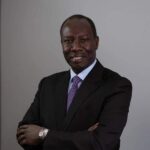
In this regard, former Senegalese President Macky Sall’s potential candidacy should not be interpreted through the lens of continental solidarity alone. As President of Senegal, one of West Africa’s more politically stable states, Sall developed a reputation for combining domestic governance with broader international engagement.11 More importantly, his role as Chairperson of the African Union elevated him beyond national politics into the realm of continental diplomacy, economic advocacy, institutional reform, and regional cooperation.
His involvement in debates on global financial restructuring, African debt burdens, development equity, climate justice, and regional security positioned him as a statesman conversant whose priorities were centred on Africa but who used the language of international institutions. Unlike candidates whose political identities are deeply polarizing, Sall’s profile may appeal precisely because he represents a relatively pragmatic middle ground, capable of engaging Washington, Brussels, Beijing, Moscow, and the Global South without being perceived primarily as an ideological extension of any single bloc.
A bridge-building leadership, with the capacity to restore trust in multilateralism while mediating among competing geopolitical centers, will contribute to the reinvigoration of the UN.12 A Secretary-General from Africa, particularly one with experience balancing domestic development challenges with international diplomatic realities, could symbolize more than representation. Such leadership could contribute to the institutional recalibration increasingly demanded by the contemporary international environment.
Macky Sall’s potential candidacy would carry significance beyond continental pride. Africa’s demographic growth, climate vulnerability, strategic resources, centrality to migration dynamics, and exposure to conflict make it one of the defining geopolitical arenas of the twenty-first century.13 Yet despite this reality, the continent is often framed internationally as a site of crisis rather than as a source of governance innovation and diplomatic solutions.14 A credible African Secretary-General would not automatically solve this imbalance, but they could contribute to reshaping how Africa is positioned within global diplomatic discourse.
However, any serious argument for an African candidate must avoid entitlement rhetoric. The proposition should not be that Africa is owed the position, nor that geographic symbolism should override broader institutional considerations. Such arguments weaken rather than strengthen the case. The stronger position is that, under specific contemporary conditions, an African candidate may offer a particularly relevant combination of legitimacy, mediation capacity, diplomatic pragmatism, and reform-oriented symbolism.
Naturally, counterarguments deserve equal attention. Central and South America possess legitimate claims rooted in representational balance, and there may be Latin American candidates with equally compelling diplomatic credentials. Furthermore, an African candidate’s own domestic political legacy may invite scrutiny, as is true for virtually any serious contender for high international office. Another truth is, no candidacy can escape the decisive influence of the permanent members of the Security Council, whose veto powers often shape outcomes more significantly than either moral arguments or regional expectations.15
However, the history of the United Nations consistently demonstrates that the selection of Secretaries-General is rarely determined solely by questions of regional rotation. More often, appointments depend on identifying candidates capable of attracting a broad consensus while avoiding significant resistance from major powers.16 This reality makes candidacies such as Sall’s plausible precisely because they may fit a moment in which geopolitical manageability matters as much as symbolic precedent.
The next Secretary-General will be expected not only to manage crises, but also to strengthen international efforts in mediation, conflict prevention, peacebuilding, and post-conflict recovery. In a world marked by growing polarization, the ability to build consensus, facilitate dialogue, and restore confidence in multilateral cooperation may prove more important than adherence to informal traditions of regional succession.17
From this perspective, Macky Sall’s potential candidacy deserves consideration because his experience reflects broader African contributions to global diplomacy, peacebuilding, and international cooperation.18 As the United Nations seeks to adapt to a changing global order, the question is not merely who should represent a particular region, but who can help advance a more inclusive, effective, and sustainable vision of international peace and security.
Endnotes
- Amitav Acharya, The End of American World Order, 2nd ed. (Cambridge: Polity Press, 2018); G. John Ikenberry, A World Safe for Democracy: Liberal Internationalism and the Crises of Global Order (New Haven, CT: Yale University Press, 2020).
- Edward C. Luck, UN Security Council: Practice and Promise (London: Routledge, 2006).
- James Traub, The Best Intentions: The Best Intentions: Kofi Annan and the UN in the Era of American World Power (New York: Farrar, Straus and Giroux, 2006); Thomas G. Weiss, Would the World Be Better Without the UN?, 2nd ed. (Cambridge: Polity Press, 2018).
- Luck, UN Security Council: Practice and Promise; Ian Johnstone, The Power of Deliberation: International Law, Politics and Organizations (Oxford: Oxford University Press, 2011).
- Acharya, The End of American World Order; Ikenberry, A World Safe for Democracy.
- Acharya, The End of American World Order; Ikenberry, A World Safe for Democracy.
- Murithi et al., African Perspectives on the Multilateral System; Dersso, Africa and the Reform of the Multilateral System.
- Murithi et al., African Perspectives on the Multilateral System; Dersso, Africa and the Reform of the Multilateral System.
- John Paul Lederach, Building Peace: Sustainable Reconciliation in Divided Societies (Washington, DC: United States Institute of Peace Press, 1997); Roland Paris, At War’s End: Building Peace After Civil Conflict(Cambridge: Cambridge University Press, 2004).
- Richard Gowan, “The United Nations in a Divided World”; Oliver P. Richmond, Peace Formation and Political Order in Conflict-Affected Societies (Oxford: Oxford University Press, 2016).
- Alioune Wagane Ngom and Joan Ricart-Huguet, “Senegal: Between Political Instability and Democratic Consolidation,” African Affairs 124, no. 496 (2025): 379-395.
- Richard Gowan, “The United Nations in a Divided World,” Hold Your Fire! Podcast, International Crisis Group, September 20, 2024.
- Henrico, Ivan, and Bohumil Doboš. 2026. “Shifting Sands: The Geopolitical Impact of Climate Change on Africa’s Resource Conflicts.” South African Geographical Journal 108 (1). doi:10.1080/03736245.2024.2441116.
- Solomon A. Dersso, ed., Africa and the Reform of the Multilateral System: The Summit of the Future and Beyond(Addis Ababa: Amani Africa Media and Research Services, 2024).
- Simon Chesterman, Secretary General? The UN Secretary-General in World Politics (Cambridge: Cambridge University Press, 2007).
- Security Council Report, “Appointing the UN Secretary-General,” Research Report, October 16, 2015.
- Saferworld, “As U.N. Secretary-General Candidates Make Pitch to Be Mediator-in-Chief, Will Peacebuilding End Up on the Cutting Room Floor?” June 23, 2026,
- African Union, “President Macky Sall Takes Over as the New Chairperson of the African Union (AU) for 2022,” February 5, 2022.