
Introduction
The issue of why some black South African youths have turned against fellow Africans can seem troubling, especially if one considers that many of the African migrants hail from countries which once stood in solidarity in the struggle against South African apartheid. This paradox, captured as xenophobia, has been explained by scholars through multiple lenses of history: economic privation, unemployment, rising crime, overcrowded services, poor living conditions, scapegoating, social pathology, fear of economic competition, competing identity-based cleavages, inequality, rising insecurity, political opportunism, and even the perceived misconduct of some migrants.¹ Yet beneath these factors lies a more fundamental driver: weaponized misinformation.
This article argues that the spread of misinformation underpins the vicious attacks on migrants from other African countries, fueling the cycles of xenophobic violence in South Africa. This can be subsumed under the rubric of agnotology – in relation to the strategic use of misinformation in the context of the politics of exclusion and its social consequences.
Agnotology as Strategic Miscommunication and its connections to Xenophobia
Agnotology suggests that when people are poorly informed, misinformed, or deliberately disinformed, the propensity for irrational behavior increases dramatically.² Such miscommunication feeds on ignorance, not just lack of knowledge. It can also be produced systematically through sustained social, political, and cultural mechanisms, particularly when knowledge is altered, hidden, or manipulated. Such behavior may stem from a lack of information or from deliberate strategies that obscure the truth, distort facts, and redirect attention away from the structural causes of societal problems. Viewed through this lens, South African xenophobia can be partly understood as the lack of knowledge severely impacting their relationship with otherwise supportive African countries that played an important role in South Africa’s struggle for liberation.
Two Faces of Ignorance
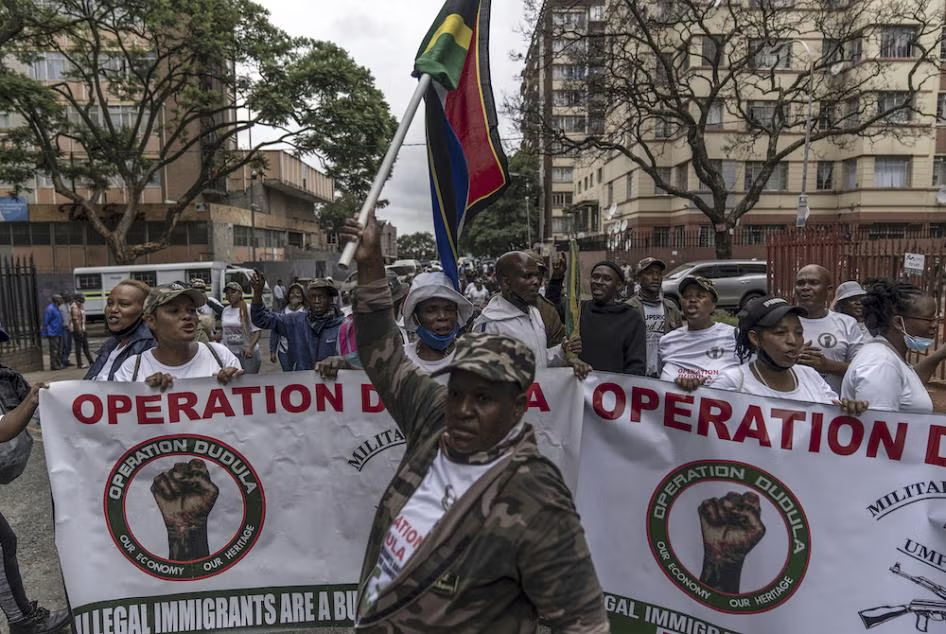
Ignorance is seldom unidirectional. It can be either genuine or contrived. Genuine ignorance arises when individuals are simply unaware of certain facts; contrived ignorance occurs when misinformation is systematically constructed and disseminated. In South Africa, both forms coexist. Many youths who align with Operation Dudula (literally meaning “to push out”),³ and participate in xenophobic violence are genuinely unaware of the solidarity that countries of African migrants offered South African freedom fighters during the anti-apartheid struggle. This is mainly because most of them were born in the post-apartheid era and unaware of certain aspects of South Africa’s history of African solidarity and support for the cause of South Africa’s liberation. At the same time, the sponsors of xenophobic attacks deliberately obscured such factual narratives and willingly spread the false narrative of foreigners taking South African jobs and resources. Such misinformation deliberately distracted many South Africans from the real structural roots of poverty and unemployment, fueling their frustration towards foreigners.⁴
Mechanisms of Misinformation
The literature identifies major mechanisms of agnotology, such as scapegoating narratives, discursive framing, selective memory, identity politicization, and institutional silence, as shaping xenophobic behavior.⁵ The South African case exemplifies all five.
- Scapegoating narratives: This works when migrants are misrepresented. In South Africa, migrants are labeled as job snatchers and criminals driving economic and social insecurity. This rhetoric dominates the language of vigilantes hunting down migrants in the country. An example of scapegoating rhetoric is found in a BBC interview, where one respondent lamented the perceived loss of economic opportunities to migrants, stating: “South Africa needs to go back to the old South Africa that we know. Our fathers started the tuck shops, but today all those tuck shops are all foreigners, especially Bangladeshis, Somalis, and Ethiopians. Why?”⁶ Similarly, in a 2018 speech at the parliament, Haniff Hoosen, the Democratic Alternative Home Affairs Shadow Minister, argued that ‘the employment of illegal and undocumented immigrants has a direct impact on our job creation abilities as a country.’7 Statements of this nature construct “undocumented” or “illegal” migrants as responsible for the displacement of local economic actors and implicitly attribute broader socio-economic challenges to their presence. In addition, slogans such as “Operation Dudula” (meaning to ‘push out’) and “Mabahambe!” (meaning ‘they must go!’)8 are examples of scapegoating tactics that frame migrants as nefarious elements that must be dealt with and expelled from South Africa. In April and May 2026, a group of South African citizens, known as the March and March, held demonstrations against migrants in several major cities, including Pretoria, Johannesburg, and Durban, some of which were associated with outbreaks of violence, and in certain cases resulted in fatalities.9
- Discursive framing: This occurs when migrants become tropes for populist rhetoric and political scapegoating. Some South African politicians have made inflammatory and unsubstantiated claims, portraying undocumented migrants as responsible for rising costs in social services and as drivers of crime. In an exclusive interview with Sunday World, Herman Mashaba, the leader of ActionSA and Johannesburg mayoral candidate, is quoted: “If you believe that you don’t want illegal foreigners to be sent back to their countries, then don’t come and talk to us because this is unacceptable to us. We must be able to deal with this issue of illegal foreigners because you can imagine when we run this city properly, we are going to invite a lot of our own people coming into the city. Those are the people we are prepared to serve, not someone coming from Pakistan or Nigeria or Zimbabwe.”10 However, several other political figures such as President Cyril Ramaphosa and opposition leader Julius Malema,11 have condemned anti-immigrant views expressed by some politicians.
- Selective memory: This refers to the historical solidarity of those who contributed to a struggle that led to freedom, such as African countries that supported South Africa’s anti-apartheid liberation movement. In this case, historical solidarity is either erased or downplayed, thereby depriving the younger population of an accurate, holistic picture of the past. Memories are preserved through representations in curricula, literature, and public monuments. Some studies have documented historical memory on the Pan-African support for the anti-apartheid struggle in South Africa. However, Johanna Mannergren et al. argue that some aspects of South Africa’s memory scape have been sidelined or receive less attention than others, producing fragmented and contested forms of public memory.12
- Identity politicization: This manifests through group-sanctioned beliefs that are rooted in identity-based social constructs that privilege xenophobic heuristics and validate the “us versus them” campaign against migrants (including refugees and asylum-seekers) in South Africa. Herman Mashaba’s statement that “Those are the people we are prepared to serve, not someone coming from Pakistan or Nigeria or Zimbabwe,” reflects an “us versus them” discourse that privileges citizens over migrants. This mirrors Loren B. Landau’s argument that notions of citizenship and belonging are frequently mobilized to justify exclusionary attitudes toward migrants in South Africa.13
- Institutional silence: This refers to the absence of a policy or institutional counterbalance to misinformation or rhetoric of violence being engineered against those who are perceived as “troublemakers.” In South Africa, inflammatory narratives linking migrants to crime, unemployment, and service-delivery failures have reinforced anti-migrant stereotypes. Institutional failure to effectively refute these claims through evidence-based communication has facilitated the spread of misinformation, which in turn has contributed to social hostility, vigilantism, and recurrent xenophobic violence.14
The analysis of the South African situation shows that xenophobia is not only a spontaneous reaction to economic hardship, perceived inequality, or insecurity. It thrives on miscommunication and a lack of historical knowledge, embedded in social narratives, identity constructs, political discourse, and institutional failures in managing migration and citizenship. This affects South Africa’s standing in Africa and its claim to promoting fundamental human rights, continental cohesion, and Pan-African solidarity.
Conclusion
Xenophobia has negatively impacted the image of South Africa, and the argument in this essay is that misinformation is a major reason behind it. It follows, therefore, that one of the most effective ways to counter disinformation and misinformation, towards stemming the tide of xenophobia in South Africa, is to invest in institutional memory and sustained information campaigns, reminding younger generations of the sacrifices made by Africans across the continent in the struggle against apartheid. Such investment ensures that the history of solidarity is not forgotten and that historical amnesia does not fuel distrust and hostility toward fellow Africans.
However, xenophobia in South Africa cannot be explained solely by the erosion of historical memory. Internal factors, such as high unemployment, persistent poverty, widening inequality, competition over scarce resources, weak service delivery, and divisive political rhetoric demonizing migrants, have also played a significant role in shaping anti-migrant attitudes. These structural and socioeconomic challenges often create fertile ground for scapegoating foreign nationals, refugees, and asylum seekers. Addressing the issue requires a multidimensional approach that transcends historical education.
South Africa has thankfully taken some steps in this direction through the National Action Plan to Combat Racism, Racial Discrimination, Xenophobia and Related Intolerance, as well as through the work of civil society organizations, faith-based groups, and human rights institutions that advocate for migrant inclusion and intercultural dialogue. Nevertheless, the persistence of xenophobic incidents suggests that these interventions need to be expanded and more effectively implemented.
Eliminating xenophobia requires addressing both the historical amnesia that obscures Africa’s solidarity with South Africa’s liberation struggle and the contemporary political and socioeconomic conditions that enable exclusionary and anti-migrant narratives to flourish.
Endnotes
- Human Rights Watch. Xenophobia and attacks against migrants, https://www.hrw.org/legacy/reports98/sareport/Adv5a.htm
- Proctor, R. N., & Schiebinger, L. (2008). Agnotology: The Making and Unmaking of Ignorance. Redwood City CA: Stanford University Press. See also: Borrelli, L.M., (2024). “Ignorance as Political Instrument? Integration Discourses on Migrant Welfare Recipients in Switzerland.” Geopolitics, 30 (3): 1150-1172, https://doi.org/10.1080/14650045.2024.2331793
- BBC Africa, Inside South Africa’s Operation Dudula: “Why we hate foreigners,” 17 September, 2023, https://www.bbc.com/news/world-africa-66808346. See also: France 24, “‘Chased like dogs’: Anti-migrant mobs in South Africa force foreigners to flee,” 6 March, 2026, https://www.france24.com/en/africa/20260603-dragged-out-of-their-houses-hundreds-forced-to-flee-violent-anti-migrant-mobs-in-south-africa
- Visagie, Justin; Castel-Branco, Ruth, Blaming migrants ignores the real causes of South Africa’s economic crisis, The Conversation, 28 June, 2026, https://theconversation.com/blaming-migrants-ignores-the-real-causes-of-south-africas-economic-crisis-286157
- Proctor, R. N., & Schiebinger, L. (2008). Agnotology: The Making and Unmaking of Ignorance. Redwood City CA: Stanford University Press.
- Inside South Africa’s Operation Dudula: “Why we hate foreigners,” BBC Africa, 17 September, 2023, https://www.bbc.com/news/world-africa-66808346
- Maunganidze, Anna, The ‘illegal migrant’ red herring, ISS Today, October 24, 2018, https://issafrica.org/iss-today/the-illegal-migrant-red-herring
- “Anti-migrant vigilante group Dudula stokes tensions in South Africa,” Reuters, 31 March, 2022, https://www.reuters.com/world/africa/anti-migrant-vigilante-group-dudula-stokes-tensions-south-africa-2022-03-31/ . See: “’They can kill you’: African migrants fear a surge in xenophobic violence in South Africa,” by Kate Bartlett, NPR, June 25, 2026, https://www.npr.org/2026/06/25/nx-s1-5866241/they-can-kill-you-immigrants-fear-a-surge-in-xenophobic-violence-in-south-africa.
- South Africa: New Waves of Xenophobic Attacks, Human Rights Watch, May 20, 2026, https://www.hrw.org/news/2026/05/20/south-africa-new-waves-of-xenophobic-attacks
- See: https://www.youtube.com/watch?v=ewRVO_m4Y5c
- Abdulrahman, Nafisat (June, 2026). ‘How Many Jobs Have You Created,’ Malema Condemns Xenophobic Attacks, Challenges Perpetrators, https://leadership.ng/how-many-jobs-have-you-created-malema-condemns-xenophobic-attacks-challenges-perpetrators/ . See also: Ogunseyin, Oluyemi (11 May, 2026). Ramaphosa condemns xenophobic attacks on Nigerians, The Guardian, https://guardian.ng/news/ramaphosa-condemns-xenophobic-attacks-on-nigerians/
- Mannergren, Johanna et al. South Africa: The legacies of colonialism, In: Peace and the Politics of Memory, Manchester University Press, 2024. DOI: https://doi.org/10.7765/9781526178329.00011
- Landau, L. B. (2011). Exorcising the Demons Within: Xenophobia, Violence and Statecraft in Contemporary South Africa. Wits University Press.
- Borman, Jan, “Activists warn Mashaba’s Hillbrow threat fuels xenophobic fears,” Our City News, 19 November, 2026, https://ourcitynews.co.za/2026/11/19/activists-warn-mashabas-hillbrow-threat-fuels-xenophobic-fears/ See also: Misago, J. P. (2017). Politics by Other Means? The Political Economy of Xenophobic Violence in Post-Apartheid South Africa. Wits University Press