
Introduction
Most of the time, when a democratic government collapses in an African country, the military is a key player: whether through a seizure of power by staging a coup or by preemptively striking to prevent a total collapse of peace and stability. The latter scenario becomes more likely when a disputed election triggers widespread violence.
The preemptive striking sometimes happens out of legitimate patriotic concern. Other times, it’s the result of calculations made by politically ambitious military officers. The complex crises of governance, insecurity, and development have direct implications for democratic struggles in Africa.
This article raises several pertinent questions. Is a democracy modeled after Western multipartyism fit-for-purpose in Africa? Do ethnic divisions, traditional structures, and weak institutions suggest modern democracy cannot effectively drive development, peace, and security in Africa? According to a survey conducted by Afrobarometer in 39 African countries, two-thirds of respondents said they preferred democracy to any other form of government. But dissatisfaction with African democracies’ actual performance has grown.¹
State and Democracy: Wither Africa?
The question about the suitability of democracy for African countries is often posed misleadingly. It assumes that the problem lies within African societies themselves, as if ethnic diversity, traditional social structures, or communal identities make the concept of modern democracy look rather alien to the continent. The reality is far more complex. The issue is not that democracy is unsuitable for Africa. In many countries where democratic institutions have been introduced, restored, and tested, more fundamental questions remain deeply contested: What is the state? Who created it? Whom does it represent or serve? And in whose interests does it operate?
State fragility does not refer merely to limited administrative capacity. The ‘fragility’ also alludes to contested political membership, uneven territorial authority, weak rule of law, unequal citizenship, and corrupt institutions distributing security and economic opportunity according to proximity to power. In other words, the problem is not simply the failure of democracy. The problem is the fragility, limited legitimacy, and the unequal reach of the state within which democracy is expected to operate. African political communities and institutions long predated colonialism, but the territorial frameworks of most present-day states were imposed through colonial conquest and then preserved during and after widespread independence throughout the continent.²
The comparison with Europe should not be romanticized. European state formation was coercive and violent. The crucial difference is that many African countries inherited borders and administrative apparatuses designed primarily to maintain order and extract resources, often with limited regard for pre-existing political communities and local systems of authority. After independence, national elites inherited states that had been designed more for command than for citizenship and representation.³ This is the heart of the dilemma.
Instead of functioning as a neutral political structure for managing pluralism, the state in many countries became a strategic prize: controlling it meant controlling public resources, security institutions, appointments, and access to political power and legitimacy.⁴ Elections therefore became more than ordinary contests over policy. They could become existential struggles over access to state power itself. In such a context, ethnicity, region, religion, or tribe may be transformed from social identities into instruments of political mobilization and survival. But this is not because Africans are inherently “undemocratic.” Instead, it’s that political institutions and electoral incentives make particular identities more salient and politically consequential than others.⁵
Statehood and democracy cannot be treated as entirely separate questions. Democracy requires a political community whose members broadly accept the territorial framework, the rules of competition, and the authority of public institutions. Yet state-building cannot be understood merely as a prior stage that must be completed before democracy can begin. Democratic participation, constitutional bargaining, and accountable government can themselves help create state legitimacy. The challenge, therefore, is not to build the state first and democratize it later, but to construct state capacity, citizenship, legality, and democratic accountability simultaneously.⁶
An equally difficult challenge is how the state and democracy can be built together. In much of Europe, centralized states and bureaucratic institutions developed before the arrival of mass democracy, often through war, coercion, taxation, and authoritarian rule.7 African societies, by contrast, inherited colonial states within internationally recognized territorial borders, while many post-colonial governments still lacked equal territorial reach, administrative capacity, or broadly shared legitimacy. They have often had to pursue state-building and democratization simultaneously, under conditions shaped by colonial borders, unequal development, weak institutions, and divided elites. This historical difference helps explain the difficulty, but it does not establish that authoritarianism is a necessary path to an effective state.
In this institutional vacuum, military armies have repeatedly presented themselves as the only forces capable of protecting national unity, ending corruption, and building the state. Coups in Sudan, Mali, Nigeria, Niger, Ghana, and elsewhere have frequently been justified as “temporary interventions” to save the nation from further chaos or division. Yet the historical record shows that military rulers have seldom constructed neutral states based on equal citizenship. More often than not, they have built security states in which coercive institutions dominate political life, and the preservation of power becomes an end in itself.8
Civilian elites have not always acted as a progressive social force or offered a successful political alternative. In many cases, political actors have engaged in struggles over power before agreeing on the constitutional and institutional foundations of the political community. They have become preoccupied with power grabbing, power-sharing, partisan competition, patronage, and the division of influence. Meanwhile, major foundational questions have gone unresolved: What should be the relationship between military and civilian authority? How should pluralism be governed? How should power and resources be distributed between the center and the regions? And what should the new national compact contain? Comparative research on African transitions shows that inherited institutions and patterns of neopatrimonial rule strongly shape whether political liberalization develops into durable democracy or ends in authoritarian reversal.9
State building cannot be a project undertaken solely by the military, a political party, or a narrow coalition of elites. It must be a broad foundational process that renegotiates the social contract and political community, and establishes enforceable rules governing citizenship, representation, resources, and coercive power. A viable state is not built by force alone, but by legitimacy. It rests not merely on borders, but on citizens’ confidence that losing an election will not mean losing their rights, security, livelihood, or place in the nation.
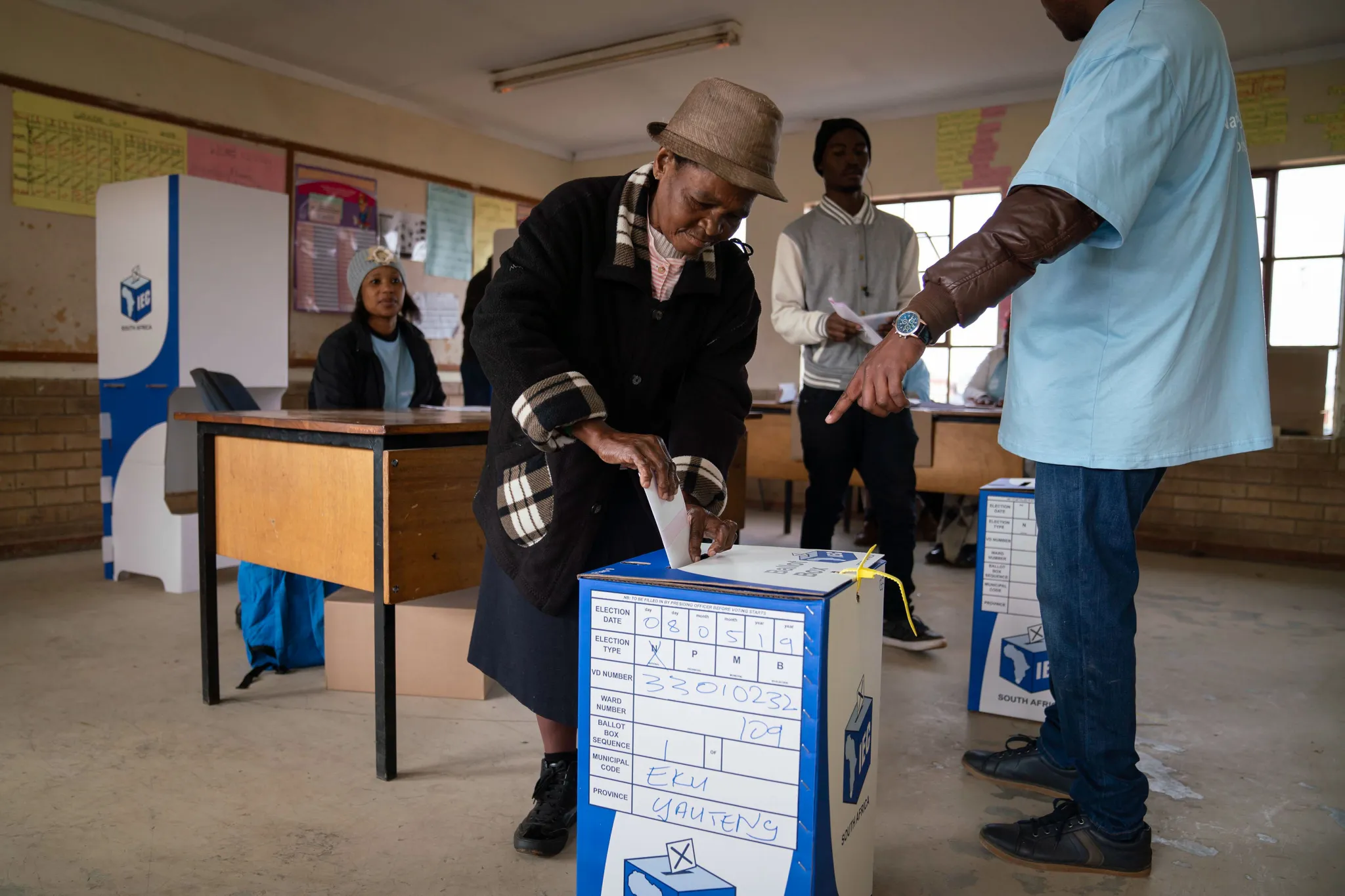
This perspective helps explain why some African countries’ democracies have been more successful than others, while also cautioning against treating any case as a perfect political model. Ghana, despite its history of coups, gradually strengthened electoral competition and achieved repeated peaceful transfers of power under constitutional rule.10Botswana developed comparatively stable institutions and, in 2024, experienced its first peaceful transfer of power between political parties after almost six decades of rule by the Botswana Democratic Party (BDP); nevertheless, scholars have long criticized its executive dominance and limited participatory depth.11 South Africa paired its 1994 electoral transition with constitutional reconstruction and an extensive renegotiation of the political order, although deep inequality, governance failures, and declining public confidence continue to test that settlement.12 Sudan, by contrast, remains trapped in recurring conflict because its political transitions have repeatedly failed to transform the institutions of coercion, the center-periphery relationship, and the distribution of national power.
The problem, then, is not that democracy is unsuitable for Africa. No democratic breakdown can be explained by a single variable such as ethnicity, culture, poverty, or colonial borders. African countries display wide variation in democratic performance, which itself demonstrates that political institutions, leadership choices, civil society, historical legacies, and balances of power matter.13 The greater difficulty is that democracy is often expected to operate where citizenship remains unequal, public authority is personalized, coercive institutions are insufficiently accountable, and access to the state determines access to security and opportunity.
Conclusion
The real question is not simply: How can democratic elections be held? Instead, the real question is: How can a state be structured so that elections are meaningful, defeat is tolerable, rights do not depend on proximity to power, and no institution stands above the constitutional order?
If state-building is left to the military or narrow partisan elites alone, the likely result will be a securitization of politics and state power, or the emergence of a clientelist or sectarian state organized around pork-barrel politics and the distribution of spoils. But if it becomes an inclusive national project that redefines power, citizenship, justice, and the legitimate use of force, the foundations of a viable democratic state may begin to emerge. Democracy does not fail in Africa because Africans are unfit for it. It fails where the state remains fragile and is captured by a small elite. Under such circumstances, public institutions are unable to effectively regulate political competition, promote equal citizenship, or ensure that public state officials are genuinely held accountable. The greatest challenge is to build a democratic state that all citizens can equally regard as representing their own collective interests.
Endnotes
- Afrobarometer, African Insights 2024: Democracy at Risk—The People’s Perspective (Accra: Afrobarometer, 2024). Across the 39 surveyed countries, 66 percent preferred democracy, while large majorities rejected one-person, one-party, and military rule.
- Crawford Young, The African Colonial State in Comparative Perspective (New Haven: Yale University Press, 1994); Jeffrey Herbst, States and Power in Africa: Comparative Lessons in Authority and Control (Princeton, NJ: Princeton University Press, 2000).
- Mahmood Mamdani, Citizen and Subject: Contemporary Africa and the Legacy of Late Colonialism (Princeton, NJ: Princeton University Press, 1996); Pierre Englebert, State Legitimacy and Development in Africa (Boulder, CO: Lynne Rienner, 2000).
- Nicolas van de Walle, “Presidentialism and Clientelism in Africa’s Emerging Party Systems,” Journal of Modern African Studies 41, no. 2 (2003): 297–321.
- Daniel N. Posner, Institutions and Ethnic Politics in Africa (Cambridge: Cambridge University Press, 2005).
- Juan J. Linz and Alfred Stepan, Problems of Democratic Transition and Consolidation: Southern Europe, South America, and Post-Communist Europe (Baltimore: Johns Hopkins University Press, 1996), especially their discussion of “stateness”; see also Linz and Stepan, “Toward Consolidated Democracies,” Journal of Democracy 7, no. 2 (1996): 14–33.
- Charles Tilly, Coercion, Capital, and European States, AD 990–1992 (Oxford: Blackwell, 1992); Herbst, States and Power in Africa. Tilly explicitly warned against assuming that the European war-making route could or should be reproduced in contemporary developing states.
- Samuel Decalo, Coups and Army Rule in Africa: Motivations and Constraints, 2nd ed. (New Haven: Yale University Press, 1990); Ruth First, The Barrel of a Gun: Political Power in Africa and the Coup d’État (London: Allen Lane, 1970).
- Michael Bratton and Nicolas van de Walle, Democratic Experiments in Africa: Regime Transitions in Comparative Perspective (Cambridge: Cambridge University Press, 1997)
- E. Gyimah-Boadi, “Another Step Forward for Ghana,” Journal of Democracy 20, no. 2 (2009): 138–152.
- Amy R. Poteete, “Is Development Path Dependent or Political? A Reinterpretation of Mineral-Dependent Development in Botswana,” Journal of Development Studies 45, no. 4 (2009): 544–571; Kenneth Good and Ian Taylor, “Botswana: A Minimalist Democracy,” Democratization 15, no. 4 (2008): 750–765. For the significance of the 2024 alternation, see the BTI 2026 Botswana Country Report.
- Timothy D. Sisk, Democratization in South Africa: The Elusive Social Contract (Princeton, NJ: Princeton University Press, 1995).
- Nic Cheeseman, Democracy in Africa: Successes, Failures, and the Struggle for Political Reform (Cambridge: Cambridge University Press, 2015); Nic Cheeseman and Sishuwa Sishuwa, “African Studies Keyword: Democracy,” African Studies Review 64, no. 3 (2021): 704–732.