
Introduction
Intensified urbanization is resulting in wetlands becoming one of Africa’s most contested sociology-ecological landscapes. While Africa is still the least urbanized region on earth, rapidly expanding urban areas in most parts of Africa exert mounting pressures on land, housing, and infrastructure, leading to encroachment on sensitive ecological areas including wetlands. Wetlands cover almost 9 per cent of the world’s land surface, but there has been a rapid loss of wetlands in recent years, decreasing their ability to offer ecological benefits such as flood regulation, water purification, carbon storage, and providing support to biodiversity. These trends are particularly significant in African cities where planning systems often struggle to keep pace with exploding urban growth rates, exposing wetlands to settlement expansion, resource extraction, and environmental degradation.[1]
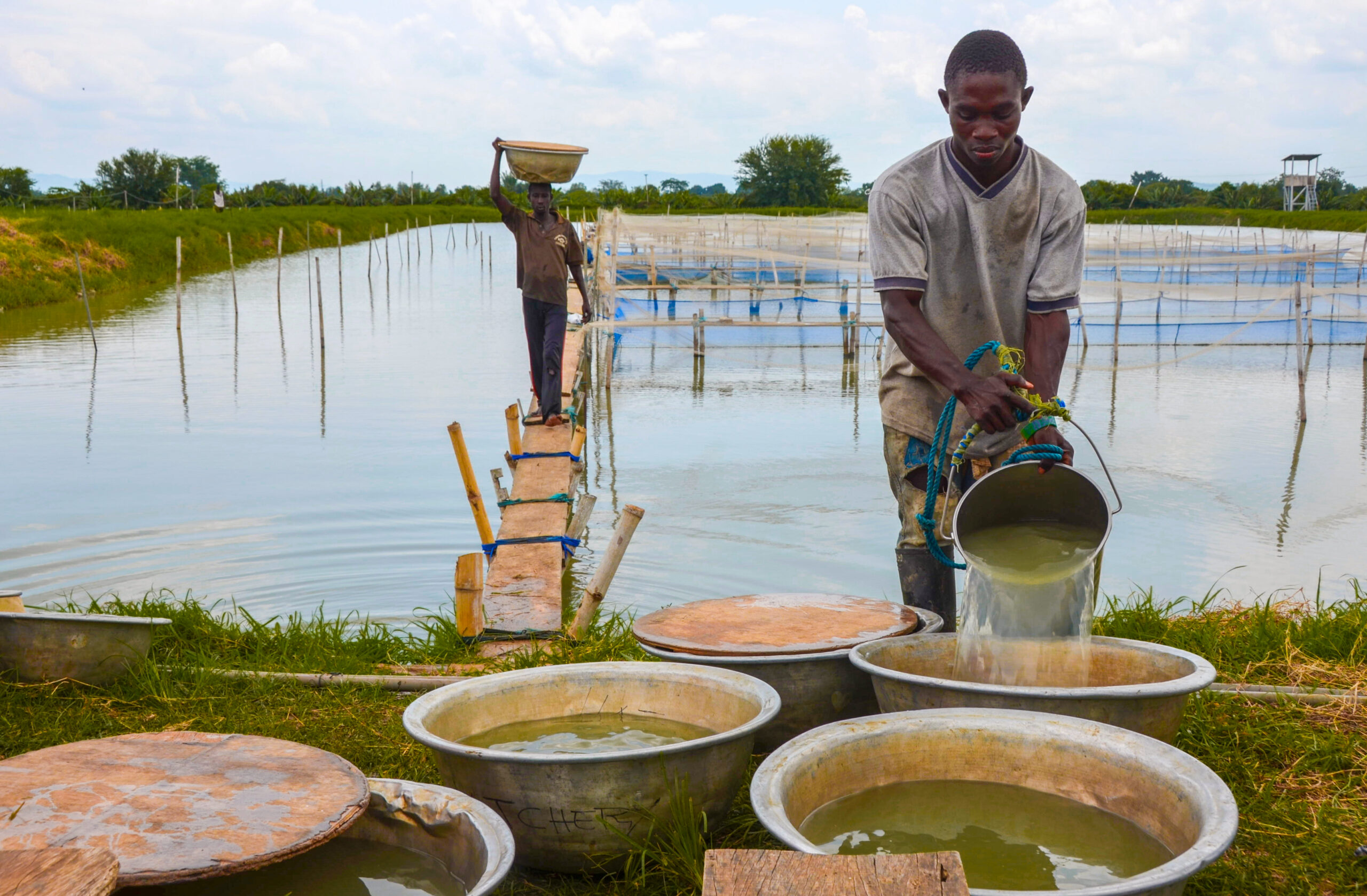
Wetlands not only provide ecological functions, but they are also a source of livelihood, food security, and a form of cultural identity for millions of people. Many communities continue to fish, cultivate wetlands, extract salt and minerals, and exploit wetland resources. This shows how access to resources cannot be separated from people’s survival or conservation activities, consequently implying an overlap between intervention and existing livelihood practices, and between conservation targets and immediate dependencies. The nature of wetlands also indicates they are lived environments rather than just ecological entities, whose environmental and livelihood priorities are in continuous negotiation with each other.[2]
It is against this background that this article explores a case study of two Ramsar wetlands in Ghana: the Sakumono Ramsar Site and the Ada Songhor Wetland Complex, both in the Greater Accra Region of Ghana. It examines how contrasting governance arrangements influence environmental and social outcomes in the Sakumono and Ada Songhor wetlands in Ghana. This links to an analysis of how governance fragmentation and institutional legitimacy shape environmental justice and collaborative stewardship in both wetlands. The article also reflects on the lessons from the two case studies on how governance of wetlands can strengthen environmental peacebuilding in ecologically sensitive landscapes.
Increasing acknowledgment of pressures on ecologically sensitive landscapes has put the spotlight squarely on the importance of governance as the defining factor in the success of conservation programs. In recent times, the governance literature not only emphasizes bottom-up approaches to the governance of ecological resources, but, more importantly, the interactions among state institutions, customary leadership, communities, and international and local development partners. Recent literature on ecological resource governance indicates that a governance regime based on consultation, trust, and institutional interaction is likely to yield greater sustainability and legitimacy in ecological resource conservation, including wetland conservation. This governance approach is likely to also reduce contestation, conflict over shared resources, and advance a sustainable pathway to peacebuilding, rather than those characterized by diffused authority and fragmented governance regimes. Governance mechanisms are thus a vital tool for understanding why some wetlands remain sites of ongoing disputes, while others reflect broader collaboration and less conflictual outcomes.
Sakumono and Ada Songhor Ramsar, both in the Greater Accra Region, were selected as case studies because the two wetlands exhibit contrasting governance trajectories despite facing similar environmental pressures. Primary evidence was generated through unstructured interviews with government agencies, customary authorities, community leaders, local resource users, and civil society actors, while documentary evidence provided institutional and policy context. For the Ada case, land-cover evidence informed the broader governance context, although the comparative analysis focuses primarily on governance processes, institutional relationships, and stakeholder experiences. Data were analysed using Reflexive Thematic Analysis to identify recurring patterns relating to institutional legitimacy, collaborative stewardship, environmental justice, and peacebuilding.
Conceptual overview
This article is anchored on an integrated framework that synthesizes environmental governance, environmental justice, and environmental peacebuilding. Environmental governance examines how institutions organize authority, participation, and decision-making concerning environmental resources.[3] Environmental justice provides the normative framework that evaluates whether these arrangements provide equitable access to resources, services, and rights.[4] It is also responsive to a diverse knowledge system, as well as ensuring that decision-making bodies recognize and embrace local and equitable representation and participation in the management of resources. Environmental peacebuilding builds on the two foregoing concepts by tracing the processes through which participation in managing resources can transform resource grievance into cooperation, alongside a stable relationship that is sustainable and equitable.
By combining environmental governance and environmental peacebuilding, this study constitutes a point of departure from a traditional evaluation of conservation efficiency and reflects on how institutions determine whether governance yields various outcomes at different levels. Wetlands are regarded not only as an environmental good but also as a contested governance space. This indicates that legitimacy, participatory governance, and negotiated access become important requirements for a sustainable relationship within a human-environment dynamic.
Contested Governance, Environmental Inequality, and the Possibilities for Peacebuilding
This section compares governance arrangements in the Sakumono and Ada Songhor wetlands, focusing on institutional relationships, resource access, livelihoods, and community participation. It highlights how governance practices shape environmental justice and the prospects for collaborative stewardship and peacebuilding.
Sakumono and Ada show contrasting, though not absolute, governance trajectories. At Sakumono, overlapping authority, inconsistent land administration, and perceived selective enforcement are associated with exclusion, livelihood loss, and mistrust. In Ada, we found cooperation, negotiated access, and community participation, although livelihood pressures and institutional constraints remain. The point is not the absence of conflict, but the response of institutions to conflicting claims and the ability of groups to influence decisions.
At Sakumono, contestation begins with disagreement over who has legitimate authority over the wetland. Forestry Commission representatives described the Ramsar site as state land following compulsory acquisition; one official stated, “Nobody owns this land anymore; it’s now state land.” The Sakumono chief, however, described continuing customary claims and disputes involving neighbouring traditional authorities, saying, “The Nungua people are claiming ownership of the land.” Statutory designation has thus not ended the dispute over different historical and customary notions of ownership. Fragmentation also occurs within the state. A Lands Commission official explained how he was sometimes at odds with other agencies because applicants submitted certificates from institutions whose registration and records could not be verified. As the official put it, “we were experiencing conflicts between ourselves and other agencies.” These uncertainties complicate responsibility for land administration and create opportunities for competing claims to persist.
These arrangements affect justice and livelihoods. Study participants recalled that the wetland supported farming and fishing, but construction, pollution and shrinking access undermined these activities. One community leader explained that people once fished and farmed, but “now they have destroyed the land and built lots of buildings.” One resident participant summarised exclusion: “The Ramsar site is on our land, but we do not have anything to do with it.” Participants questioned why small-scale farming was restricted while large developments appeared to continue, raising questions about access, development benefits and who bears conservation costs.
Perceived unequal enforcement weakened institutional legitimacy. Participants described demolition exercises in which some structures were removed while others remained, prompting suspicion that politically connected developers had received preferential treatment. One asked: “Is it because those whose structures were not demolished are connected to the powers that be?” This statement records a participant’s perception, not independent proof of political influence, but such perceptions shape trust. Customary leaders also said they were blamed for encroachment while excluded from decisions: “We are not consulted about how the wetland is managed.” Unclear mandates, accusations, and limited consultation weaken coordination and shared monitoring. Residents said their knowledge of land sales and construction was underused.
Ada presents a comparatively more collaborative pattern. Interviewees described customary authorities working with conservation agencies through public education, community mobilization, and dispute mediation. A traditional leader explained that when the Wetlands Division educated residents, traditional authorities assisted when needed. Forestry Commission officials also stressed involvement and refresher training for communities. One official observed, “When they know the place belongs to them, protecting it becomes easy.” Participants described local committees that report illegal mangrove cutting and support conservation. These accounts suggest that community participation extends beyond consultation to practical monitoring and shared responsibility. Customary institutions appear more often to complement state conservation efforts than openly contest them, although this does not mean all disputes have been resolved.
The contrast is also visible in how conservation and livelihoods are negotiated. In Ada, officials described allowing farming in buffer and transition areas while protecting core areas: “The buffer and transition areas we allow them to farm. The core area we don’t allow them.” Officials nevertheless acknowledged that restricting salt mining could affect households with few alternatives. A traditional leader proposed designated plots for cultivation to provide livelihoods and reduce pressure on protected areas. Participants also identified community tourism, including training residents as bird guides, as a potential source of income linked to conservation. These examples do not show that Ada has eliminated livelihood tensions; they indicate that these tensions are more explicitly recognised and addressed through dialogue, differentiated access and proposals for local benefits.
Communities in both sites are neither simply causes of degradation nor passive recipients of conservation policy. Their agency depends on opportunities for participation. At Sakumono, residents’ knowledge of encroachment was underused; in Ada, committees, education, and customary-state collaboration provide channels for involvement in decision-making Stewardship therefore depends on recognising local knowledge and clarifying responsibilities. Ada still faces resource constraints, while Sakumono’s contested authority and perceived unequal enforcement obstruct cooperation. Overall, Sakumono illustrates how fragmented authority, unequal access and perceptions of selective enforcement can deepen grievances and weaken the legitimacy required for cooperation. Ada shows that dialogue, community monitoring, and negotiated access can provide a stronger, though imperfect, basis for collective stewardship. The evidence does not establish that collaboration automatically produces peace or that Ada is conflict-free. Rather, it shows that disputes are shaped by how institutions distribute access, recognize affected groups, and respond to competing claims. Environmental peacebuilding therefore begins with everyday governance: fair rules, credible coordination, and meaningful participation can help prevent environmental disputes from hardening into persistent antagonism.
Conclusion
The comparison demonstrates that wetland governance is fundamentally about institutional legitimacy and social relations. Conservation is unlikely to endure when communities perceive regulations as unfair or disconnected from their livelihoods and wellbeing. Inclusive and accountable governance can help transform resource grievances into cooperation, offering important lessons for Ghana and other African contexts.
Policy Options
Government agencies, local authorities, and customary institutions should clarify responsibilities and coordinate land administration. The governance structure of Ramsar should include regular forums for community participation and knowledge-sharing. Enforcement must be transparent, fair, and consistent across livelihood activities and large developments. Finally, conservation plans should support feasible livelihood alternatives, including agreed buffer-zone cultivation and community-based ecotourism, while protecting ecologically sensitive areas.
Endnotes
- Zedler, J. B., & Kercher, S. (2005). Wetland resources: Status, trends, ecosystem services, and restorability. Annual Review of Environment and Resources, 30, 39–74. https://doi.org/10.1146/annurev.energy.30.050504.14424
- Duku, E., Dzorgbe Mattah, P. A., & Angnuureng, D. B. (2022). Assessment of wetland ecosystem services and human wellbeing nexus in sub-Saharan Africa: Empirical evidence from a sociology-ecological landscape of Ghana. Environmental and Sustainability Indicators, 15, 100186. https://doi.org/10.1016/j.indic.2022.100186
- Lemos, M. C., & Agrawal, A. (2006). Environmental governance. Annual Review of Environment and Resources, 31, 297–325. https://doi.org/10.1146/annurev.energy.31.042605.135621
- Schlosberg, D. (2007). Defining environmental justice: Theories, movements, and nature. Oxford University Press. https://doi.org/10.1093/acprof:oso/9780199286294.001.0001